
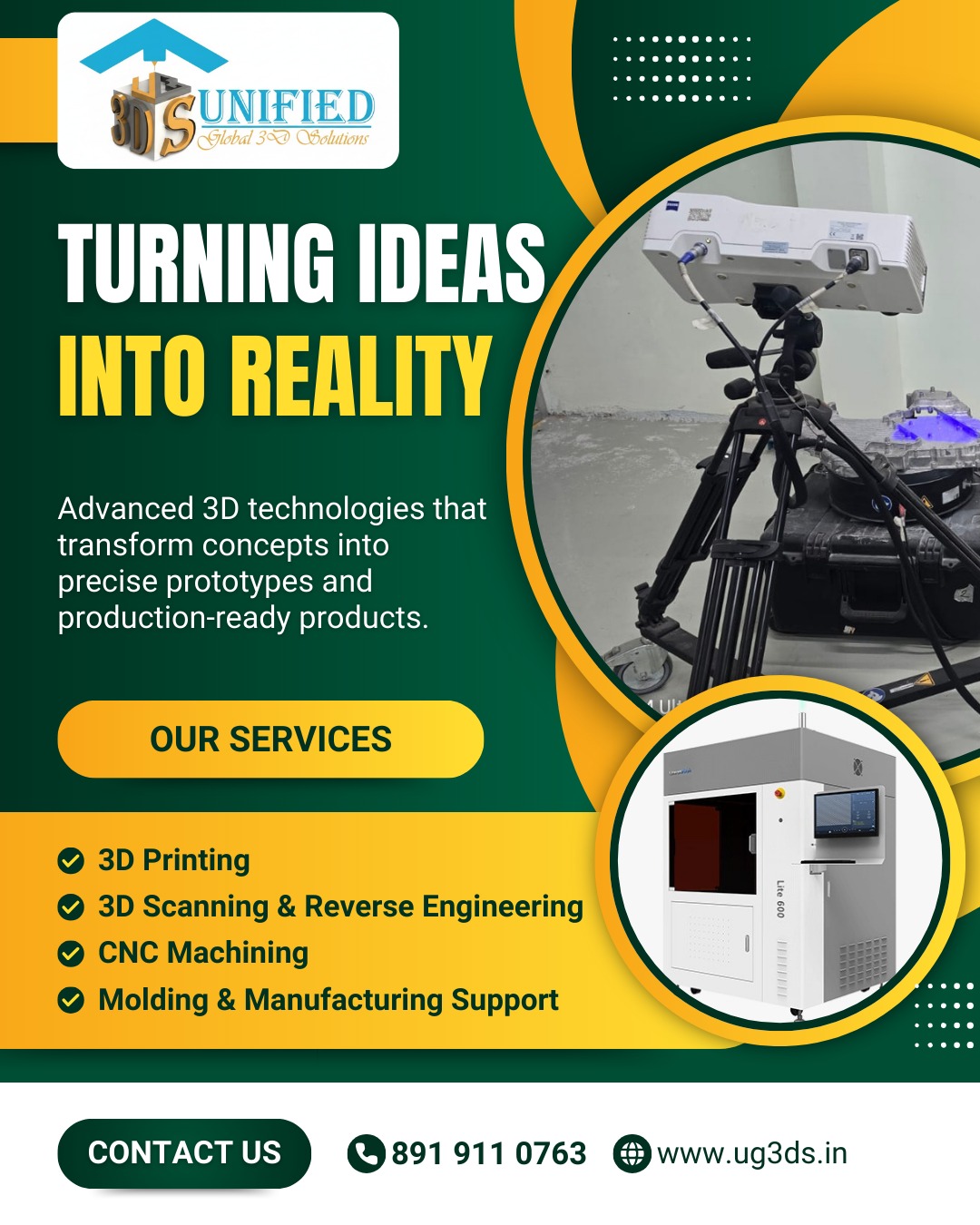
Complete guide to 3D designing and rapid prototyping for startups. Learn how 3D printing, CNC machining and additive manufacturing speed product development. For startups, turning an innovative idea into a market-ready product requires speed, precision, and cost efficiency. This is where 3D designing and rapid prototyping services become essential. With advancements in 3D printing, additive manufacturing, and CNC machining, startups can now develop, test, and refine products faster than ever before.
Understanding 3D Designing
The product development journey begins with CAD design. Using advanced 3D modeling software, designers create accurate digital representations of products. These models allow startups to visualize dimensions, materials, and functionality before moving into production. Modern 3D scanning and reverse engineering tools further enhance this process by converting physical objects into editable digital files.
High-quality 3D designing reduces errors and ensures better performance in later stages of manufacturing. It also makes collaboration easier between engineers, designers, and investors by providing a clear product concept.
What is Rapid Prototyping?
Rapid prototyping involves creating physical models directly from CAD designs using advanced technologies like FDM, SLA, SLS, MJF, and DMLS. These industrial 3D printing methods enable startups to quickly produce functional prototypes for testing and validation.
Instead of investing in expensive molds and tooling, startups can use 3D printing services to manufacture low-cost prototypes within days. This speeds up the design validation process and helps identify improvements before large-scale production.
Benefits for Startups
- Faster Time-to-Market: Quick prototype development allows startups to launch products sooner.
- Cost Efficiency: Reduced tooling and material waste lower production costs.
- Design Flexibility: Easy modifications to CAD models improve product performance.
- Risk Reduction: Testing functional prototypes minimizes production errors.
- Scalability: Seamless transition from prototype to full production using injection molding or CNC machining services.
Integrating Manufacturing Solutions
For startups aiming to scale, combining rapid prototyping with precision CNC machining, silicone molding, and vacuum casting ensures smooth production workflows. Once the prototype is finalized, injection molding supports high-volume manufacturing with consistent quality.
Startups in industries such as automotive, healthcare, electronics, and consumer goods benefit greatly from this integrated approach. Advanced metal 3D printing also allows production of strong, lightweight components for demanding applications.
Choosing the Right Service Provider
Selecting a reliable partner for 3D designing and rapid prototyping services is crucial. Look for a provider that offers end-to-end manufacturing solutions, advanced technology, skilled engineers, and strict quality control processes. Having multiple services under one roof ensures better coordination and faster project completion.
3D designing and rapid prototyping have revolutionized how startups approach product development. By leveraging modern additive manufacturing technologies and precision engineering services, startups can innovate confidently while minimizing costs and risks. From concept visualization to production-ready components, these solutions empower entrepreneurs to bring ideas to life efficiently and competitively.
With the right strategy and manufacturing partner, startups can accelerate growth and successfully compete in today’s dynamic market.